

When a Texas real estate demand letter is needed, the first formal letter can shape the entire dispute. A strong pre-suit demand letter can clarify the issues, preserve rights, create settlement leverage, and sometimes help avoid litigation altogether.
What separates a demand letter that gets results from one that is ignored? As with anything designed to perform, it comes down to anatomy. An effective demand letter has a framework beneath the surface that sets it up for success. Once you recognize this structure, you can tell almost instantly whether a letter was built to get results or just to vent. Let's dissect it.
The Function of a Demand Letter
A demand letter is a formal notice sent from one party to another to resolve a dispute—typically before any lawsuit is filed. At a minimum, it identifies the parties involved, explains what happened, outlines the legal basis for the claim, states what's being demanded, and sets a response deadline.
In a Texas real estate dispute, an effective demand letter often does five things:
-
Connects facts, law, and claims: A well-crafted demand letter does more than recite facts—it connects those facts to the specific contract terms, statutes, or legal theories that may apply. Depending on the facts, that may include a seller disclosure issue, a breach of contract claim, or a potential Deceptive Trade Practices Act (“DTPA”) claim.
-
Strategically structured and controls the narrative: Narrative is controlled from the outset. A strategically structured demand letter may present facts in a deliberate sequence that supports your client's position while preemptively addressing likely counterarguments. That initial framing can influence how mediators, opposing counsel, and judges interpret the facts if the matter escalates.
-
Frames exposure, risk, and consequences: An effective demand letter explains the practical consequences of the dispute. Depending on the claim and contract, that may include documented economic losses, attorney's fees, statutory damages, or other remedies. When the demand ties those numbers to supporting records, settlement can become more attractive than prolonged litigation.
-
Encourages engagement: By articulating the claim, identifying key documents, and setting a reasonable response deadline, the letter makes it harder for the recipient to ignore the issue or respond with only a vague acknowledgment.
-
Signals preparedness:The tone, organization, and legal precision of the letter can show that the sender has evaluated the dispute carefully and is prepared to pursue the next step if resolution is not possible.
A well-drafted demand letter gives the other side a clear, documented chance to fix the problem efficiently, instead of jumping straight to litigation.
For example, a weak demand might say: “You breached the contract and owe damages.” A stronger version would frame the issue more precisely: “The contract required delivery of X by Y date. Because delivery did not occur, the buyer incurred Z in documented losses.” The second version gives the recipient facts to evaluate, a basis for the demand, and a clearer path toward resolution.
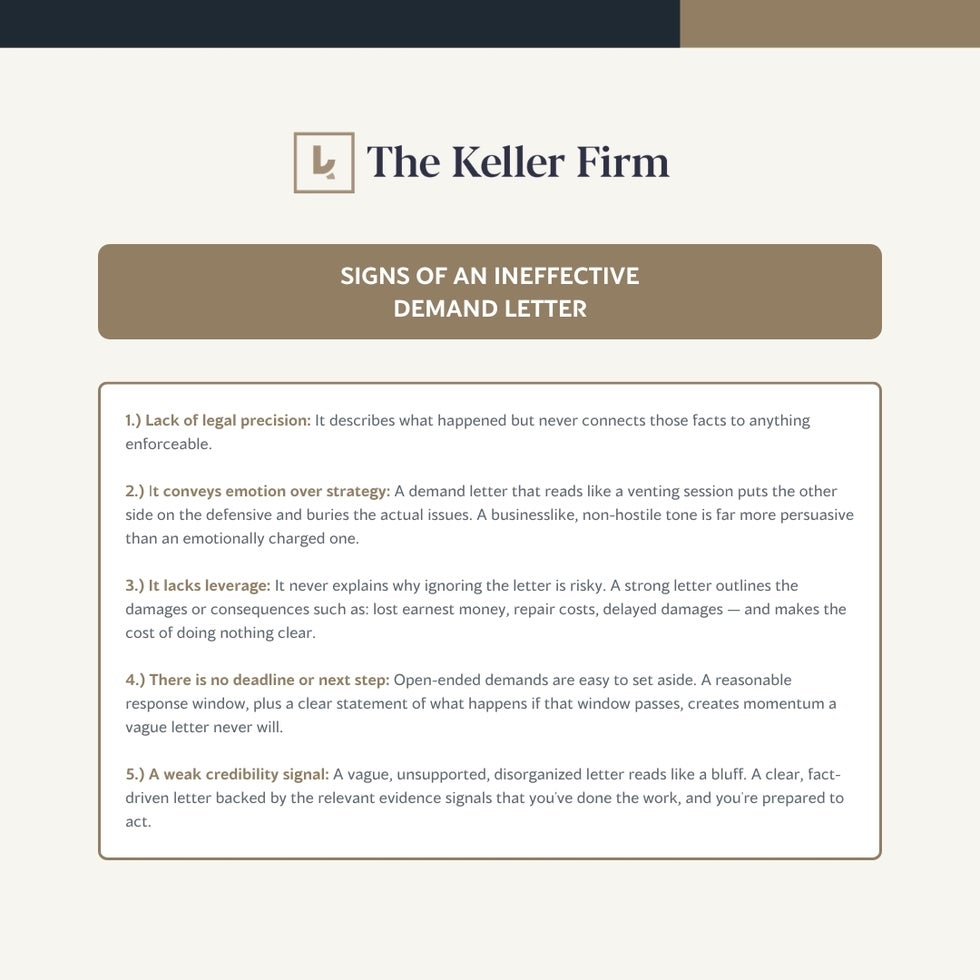
Signs of an Ineffective Demand Letter
A poorly written demand letter may fail due to one of these five reasons:
Texas-Based Strategy for Real Estate Disputes
In Texas, there may be an extra strategic wrinkle. Some claims require pre-suit written notice before a lawsuit seeking damages can be filed. One common example is the DTPA, which generally requires a consumer to give written notice at least 60 days before filing suit and to describe the complaint and claimed damages in reasonable detail. Another common example is a claim that falls under the Residential Construction Liability Act (“RCLA”), which also contains pre-suit notice requirements.
That does not mean every real estate dispute involves the DTPA. Notice requirements can vary depending on the claim, the contract, and the facts. Before a demand letter goes out, it is worth working through:
-
Whether a statute, certain insurance provision, or other rule requires a specific form of written notice first.
-
Whether the demand letter is detailed enough that the recipient can understand both the basis of the complaint and the damages claimed. Texas guidance on these notices stresses clarity and specificity.
-
Whether the contract itself has notice or cure provisions, such as a required address or an opportunity to fix a default, that may need to be followed.
Getting these right does double duty: it protects your rights if litigation becomes necessary, and it tends to make the other side take settlement seriously.
An attorney can evaluate whether a DTPA notice letter, contract notice, cure demand, or another form of pre-litigation notice is appropriate before the dispute moves forward.
Resolution Opportunities for Texas Real Estate Disputes
Handled well, a demand letter opens a door to resolution rather than starting a fight. Many disputes settle at or shortly after this stage, simply because a strong letter focuses on the issues and puts a concrete path forward on the table.
The common outcomes look like:
-
Payment, reimbursement, or another negotiated financial remedy.
-
Performance of an obligation — repairs made, corrections completed, documents delivered.
-
A contract modification or extension that salvages the deal.
-
A written settlement agreement that brings the whole thing to a clean close.
When the demand explains the requested outcome, supports the amount requested, and gives the other side a practical response window, it can make resolution easier to evaluate.
When is Litigation Necessary?
Not every dispute is resolved on paper. If a clear, reasonable demand has been made and the other side refuses to respond, denies responsibility, or offers only an unfair resolution, litigation may become necessary to protect your rights and move the dispute forward. At that point, the demand letter serves as a key piece of evidence, showing the court that you clearly explained the problem, complied with any pre-suit notice requirements, stated what you were asking for, and gave the other side a fair chance to resolve the matter without a lawsuit.
Conclusion
A strong demand letter is often the first real turning point in a Texas Real Estate dispute. If you're dealing with any of the following, it's worth understanding where you stand first:
If you are facing a Texas real estate dispute, speaking with a Real Estate Attorney may help evaluate your claims, organize the facts, identify notice requirements, and determine whether a demand letter is the right next step. Contact The Keller Firm today to learn how an attorney may help you navigate your matter.
FAQ's
What is a demand letter?
A demand letter is a formal written notice that explains a dispute, identifies the requested resolution, and gives the recipient an opportunity to respond before litigation is pursued.
Do I need to send a demand letter before filing a lawsuit in Texas?
Sometimes. Certain claims, including DTPA claims or claims that fall under the RCLA, generally require written notice before filing suit. Other notice duties may come from a contract, statute, or the facts of the dispute.
What should a demand letter include?
It often includes the parties, key facts, relevant contract terms or legal claims, supporting documents, the requested outcome, and a reasonable response deadline.
Can a demand letter help avoid litigation?
It can. A focused demand letter may help the parties understand the dispute, exchange information, and consider pre-litigation resolution before filing a lawsuit.
Disclaimer: This website is for informational purposes only and does not constitute legal advice. Do not act or refrain from acting based on anything you read on this site. Use of this site or communication with The Keller Firm does not create an attorney-client relationship.
Sources
-
Callahan & Blaine, “Understanding a Legal Demand Letter”
-
Maryland People's Law Library, “Demand Letters – Tips on Making a Demand”
-
Aaron Bruner Law, “Writing Effective Demand Letters: Strategies for Maximizing Impact”
-
The Law Dictionary, “What Is a Demand Letter? How to Respond”
-
EvenUp Law, “What Is a Demand Letter for Personal Injury Claims?”
-
UMKC Law Library, “Litigation Drafting Resources: Demand Letter”
-
ALWD, “A Shot Across the Bow: How to Write an Effective Demand Letter”
-
TexasLawHelp, “Deceptive Trade Practices Act: Protections for Consumers” and Texas State Law Library, “DTPA Lawsuits – Consumer Protection”

Comments
There are no comments for this post. Be the first and Add your Comment below.
Leave a Comment