

Basic Definition of a Bona Fide Purchaser in Texas
In Texas, a bona fide purchaser is a person who acquires property in good faith, for valuable consideration, and without notice of another person's claim or interest in the property. Texas authorities commonly describe the doctrine this way: the buyer must pay real value, act honestly, and lack actual or constructive notice of a competing interest. In plain English, a bona fide purchaser is an innocent buyer who paid for the property and had no reason to know someone else had rights to it.
How the Doctrine Works in Texas
Texas follows a notice-based recording system that protects later purchasers who buy for value without notice of an earlier unrecorded interest. That means a prior unrecorded deed or interest may still be valid between the original parties, but it may not be enforceable against a later bona fide purchaser.
This rule matters because deeds, liens, and other title instruments are supposed to be filed in the county real property records so future buyers can discover them. When an earlier interest is not properly recorded, Texas law often favors the later innocent purchaser who relied on the public record and completed the transaction in good faith.
The Three Main Elements to Qualify as a Bona Fide Purchaser in Texas
To qualify as a bona fide purchaser in Texas, three core elements must be present.
-
The Buyer Must Pay Valuable Consideration: The purchaser must give real value for the property, not just receive it as a gift or for a nominal amount. This requirement exists because the law gives special protection to a buyer who actually puts money or equivalent value at risk in the transaction.
-
The Buyer Must Act in Good Faith: Good faith generally means the transaction was honest and free from fraud, collusion, or deliberate avoidance of obvious problems. A person who knowingly participates in a questionable transfer, or who ignores facts suggesting someone else may have a claim, may have trouble establishing bona fide purchaser status.
-
The Buyer Must Lack Notice of a Prior Claim: The buyer must not have notice of another person's competing interest at the time of purchase. This notice issue is often the most important part of the analysis in Texas title disputes.
What Does “Notice” Mean in Texas?
Texas law generally recognizes three ways a buyer may be charged with notice of a prior claim: actual notice, constructive notice, and inquiry notice.
Actual Notice
Actual notice means the buyer truly knew about the competing claim or interest. For example, a buyer may have actual notice if someone directly told them about the claim or if they personally reviewed documents showing the dispute.
Constructive Notice
Constructive notice usually comes from the public records. If a deed, lien, or other instrument affecting title was properly recorded, Texas law treats later buyers as though they knew about it, even if they didn't have actual knowledge.
Inquiry Notice
An inquiry notice arises when the facts would lead a reasonable buyer to investigate further. One common example is when someone other than the seller openly possesses the property. In Texas, visible possession can put a buyer on notice that additional rights may exist.
If a buyer has actual, constructive, or inquiry notice of a competing claim, that buyer generally cannot qualify as a bona fide purchaser.
Practical Takeaways for Texas Buyers
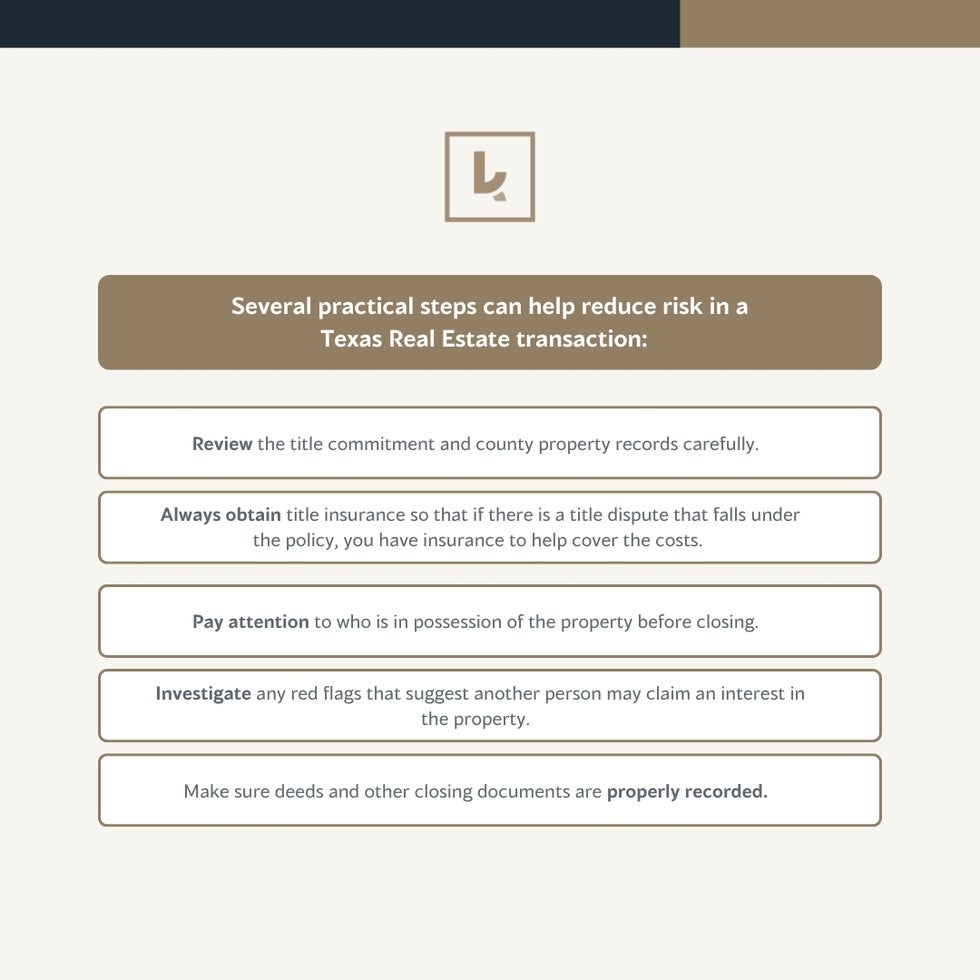
While these steps do not eliminate all title risks, they can help strengthen a purchaser's position and reduce the likelihood of future disputes.
Bona fide purchaser status in Texas comes down to three questions: Did the buyer pay value, act in good faith, and lack notice of a competing claim? Because these disputes are highly fact-specific, the outcome can turn on small details in the chain of title, possession of the property, or what the buyer knew before closing.
If you are dealing with a disputed deed, unexpected lien, or ownership question involving Texas real estate, consider speaking with a Texas Real Estate attorney before taking action. The Keller Firm focuses on Texas Real Estate and property disputes. Schedule a Strategy Session and learn how an attorney can evaluate your situation and walk you through your options.
Disclaimer: This website is for informational purposes only and does not constitute legal advice. Do not act or refrain from acting based on anything you read on this site. Use of this site or communication with The Keller Firm does not create an attorney-client relationship.
Sources
Texas Opinions – Bona Fide Purchaser (texas-opinions)
Texas Attorney General Letter Opinion No. 89-034 www2.texasattorneygeneral
Inquiry Notice in Texas – Chavana Law (chavana)
What Is a Bona Fide Purchaser in Texas? – Barsalou Law(barsalou-law)
Real Property Deeds – Texas State Law Library(guides.sll.texas)

Comments
There are no comments for this post. Be the first and Add your Comment below.
Leave a Comment