
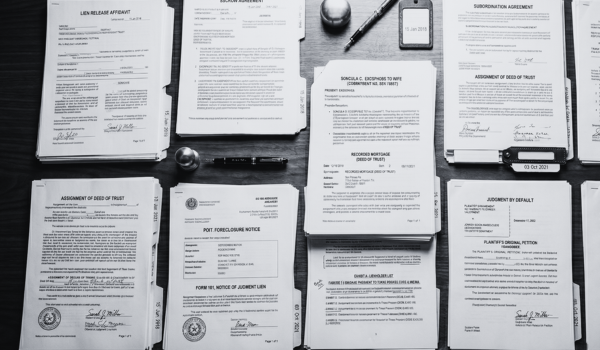
Somewhere within a county records office in Texas, there's a lien evidencing a debt that was paid off years ago but never released. It might be sitting on the property you're about to buy, creating a clouded title that halts your closing.
Unreleased mortgages and liens are one of the most common title defects in Texas real estate — and one of the most disruptive to a closing. They don't always signal fraud or bad intent. Sometimes a lender gets acquired, a contractor closes their business, or a lien release simply never made it to the county clerk's office. In these cases, the debt is gone but the record of the lien lingers.
If you're under contract on a Texas property, here's what you need to understand before closing day.
What Is an Unreleased Lien?
A lien is a legal claim against a property used to secure a debt. When a homeowner takes out a mortgage, the lender places a lien on the property. When the loan is paid off, the lender is supposed to file a release — sometimes called a lien discharge, deed of trust release, or mortgage satisfaction — with the county clerk. When that release is never filed, the lien remains in the title record. The loan was paid, but the lien still clouds the title — and transfers with the property to the next buyer.¹
Common types of unreleased liens in Texas real estate include:
-
Unreleased mortgage liens from prior owners whose lenders failed to file a deed of trust release after payoff.
-
Mechanic's liens from contractors who worked on the property, and either were not paid or whose releases were never recorded after settlement.
-
Tax liens from delinquent property taxes owed by a prior owner.
-
Judgment liens from court rulings against a prior owner that attached to the property.
Each type carries different implications for a buyer's ability to close, finance, and obtain clear title.
Why This Happens — and Why It's Hard to Catch
If a property owner has paid back the loan or other debt on the property, they may naturally assume the lien was released. They took care of their responsibility to pay the debt, and they've trusted the lender or other entity to take care of their responsibility to release the lien.
Texas Finance Code § 343.108 requires mortgage servicers to release a lien within 60 days of a home loan being paid in full — but compliance is not guaranteed. Lenders get acquired, loan servicing transfers between companies, and payoff records can get lost in those transitions. Like any other industry, mistakes happen.
What Happens When an Unreleased Lien Surfaces
Unreleased liens are a leading cause of delayed or canceled closings in Texas real estate.³ They frequently surface late in the transaction — after the option period has expired and a buyer is already committed to closing.
When a lender discovers a clouded title, they may not fund the mortgage. The closing stalls while the lienholder is located and a release is obtained. If the original lender has gone out of business or the contractor cannot be found, resolving the lien may require a quiet title action — a legal proceeding to establish clear ownership through the courts. The burden of resolving the issue typically falls on the current owner or buyer rather than the lender that created it.²
To illustrate how this can play out in practice, consider a hypothetical buyer in McKinney who purchases a flipped home. Six months after closing, she attempts to refinance. A lender's title search identifies an unreleased mechanic's lien from a roofing contractor who performed work on the property two owners prior. The lien was never formally released following a disputed payment.
Depending on the circumstances, the refinance may be delayed while the issue is addressed. In some cases, resolving the lien may involve locating the original contractor. This is done even if the business is no longer active to obtain a release or pursue a quiet title action to clear the record.
What Purchasers Can Do During the Buying Process
Review the title commitment during the option period. Unreleased liens typically appear in Schedule C of the title commitment — the section that lists conditions that must be resolved before the title company will issue insurance. This is different from Schedule B, which lists exceptions. Schedule C items are required resolutions.
Ask about the property's ownership history. Flipped properties, estate sales, and homes that have changed hands multiple times carry a higher likelihood of unreleased encumbrances. In DFW's active investor market, this is especially relevant for buyers purchasing recently renovated homes.
If an unreleased lien is identified before the option period expires, buyers have the most options available to address it.
Before You Close
An unreleased lien is not always the seller's fault — and it is not always a sign of a bad transaction. But it is a title condition that will likely need to be resolved before a buyer can obtain title insurance. Knowing it exists before closing day — not on closing day — can give buyers meaningful options.
Experiencing a dispute involving an unreleased lien? Contact our team today.
Disclaimer: This website is for informational purposes only and does not constitute legal advice. Do not act or refrain from acting based on anything you read on this site. Use of this site or communication with The Keller Firm does not create an attorney-client relationship.
Sources
Texas Department of Insurance. Title Insurance FAQ. https://www.tdi.texas.gov/title/titlefaqs.html —
Texas Finance Code § 343.108 — Release of Lien After Payoff by Mortgagor. Texas Legislature Online. https://statutes.capitol.texas.gov/Docs/FI/htm/FI.343.htm#343.108 — Statutory text requiring mortgage servicers and mortgagees to deliver or file a release of lien not later than the 60th day after receiving the correct payoff amount from a mortgagor. Added by Acts 2023, 88th Leg., R.S., Ch. 303 (H.B. 219), eff. September 1, 2023.
Texas Department of Insurance. Title Insurance — Consumer Information. https://www.tdi.texas.gov/title/title.html

Comments
There are no comments for this post. Be the first and Add your Comment below.
Leave a Comment