

Home Inspection Legal Red Flags Every Texas Buyer Should Know
A home inspection doesn't just tell you what needs fixing; it can also uncover legal risks that affect your title, your contract, or even your ability to close. If you're buying property in Texas, it's essential to view inspection findings with a legal mindset not just a repair checklist.
At The Keller Firm, we help buyers across Dallas and the surrounding areas understand which findings trigger legal rights and how to respond before it's too late.
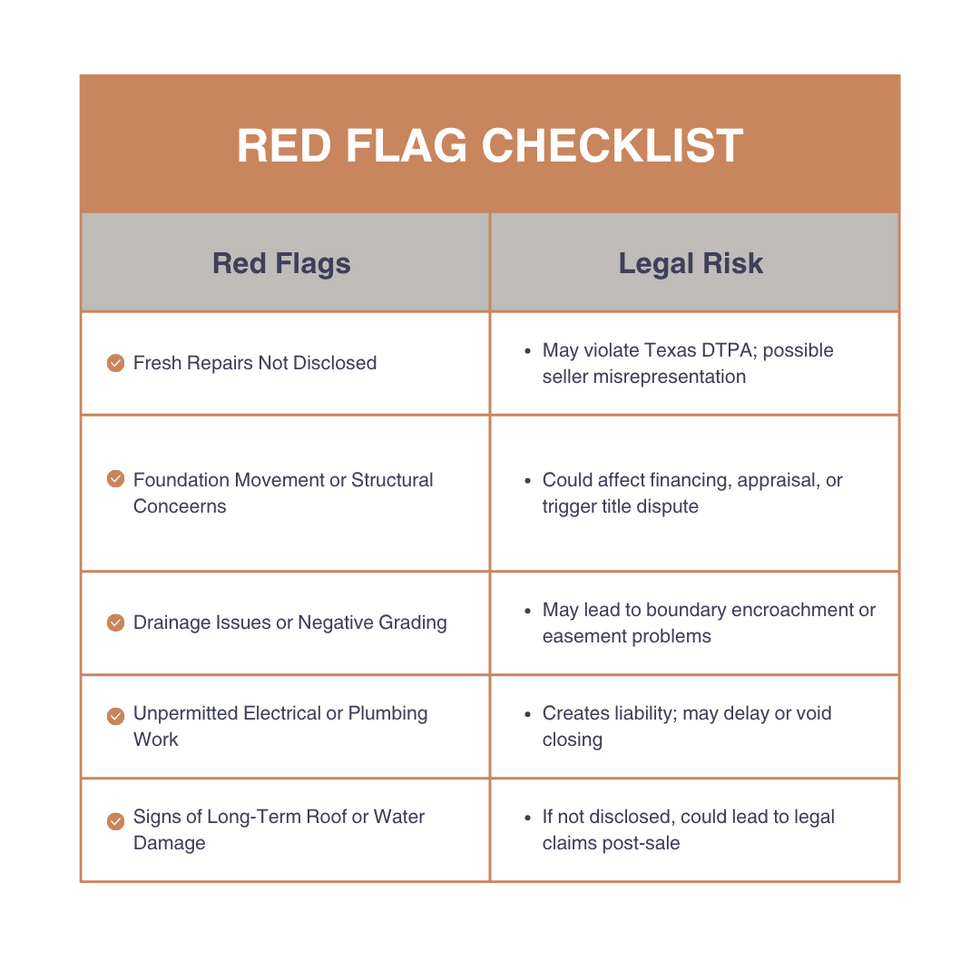
Here are five of the most common home inspection legal red flags in Texas, and what you can do if you spot them.
1. Fresh Repairs with No Disclosure
If your inspector notes new drywall patches, sealed foundation cracks, or recent ceiling repairs but none of these are mentioned in the Seller's Disclosure, that's a red flag. Under the Texas Deceptive Trade Practices Act (DTPA), sellers must disclose known material defects.
Failing to do so may constituteseller misrepresentation in Texas.
Tip: Always compare your inspection report with the disclosure form. Inconsistencies may give you the right to renegotiate or terminate the contract entirely.
2. Foundation Movement or Structural Concerns
Foundation movement is common in Texas, but major signs like sloping floors, wide cracks, or prior leveling work can point to serious structural problems. These issues may affect appraisal, financing, or future repairs not factored into your offer.
They can even create a title dispute after home inspection if the home sits on unstable land or near an encroachment.
Tip: Use your option period to investigate further and consult a real estate litigation attorney before accepting repair credits or moving forward.
Read TREC's guidance on assessing "adverse performance" of foundations.
3. Drainage Issues and Property Line Conflicts
If the report notes ponding water, negative grading, or runoff onto a neighbor's lot, this isn't just cosmetic, it could lead to boundary encroachment in Texas or drainage-related disputes.
Fences, retaining walls, or shared driveways that cross property lines may require resolution through a quiet title action in Dallas.
Tip: Review your title commitment and any easements noted in Schedule B. If you're unsure about property boundaries, seek legal advice early.
4. Unpermitted Electrical or Plumbing Work
Defective wiring, exposed GFCI outlets, or PVC plumbing not up to code is more than a fix-it item, it may create legal and insurance risks. If the seller performed work without permits, it could delay closing or result in a violation notice from your local building department.
Tip: Ask your inspector if the work appears professionally installed. If not, you may be able to demand repairs or delay closing until it's resolved.
5. Signs of Water Intrusion or Roofing Issues
Inconsistent shingles, attic stains, and mildew odors are all signs of hidden damage. If these aren't disclosed and appear to be long-term problems, the seller may have failed to meet disclosure obligations.
Roofing defects are one of the most common sources of post-closing litigation and can cost buyers thousands in unplanned repairs.
Tip: Document everything. If you suspect misrepresentation, speak to a real estate litigation attorney before accepting repair credits.
Why Legal Review of Inspections Matters
A licensed inspector identifies visible issues. But understanding which ones could:
- Trigger legal termination rights
- Justify contract renegotiation
- Serve as evidence of seller misrepresentation in Texas
- Delay or prevent clean title transfer
Buyers shouldn't be left guessing which problems are deal-breakers. That's where we come in.
What to Do If Your Inspection Raises Concerns
- Don't panic, but don't wait
- Review the report alongside the Seller's Disclosure
- Document inconsistencies or legal concerns
- Use your option period wisely
- Speak with a real estate attorney if unsure
Have concerns after your home inspection in Texas?
Explore our resources or reach out to learn how The Keller Firm helps buyers navigate inspection-related risks with clarity and legal protection.
Disclaimer: This website is for informational purposes only and does not constitute legal advice. Do not act or refrain from acting based on the content of this site. Use of this site or communication with The Keller Firm through this site does not establish an attorney-client relationship.

Comments
Colorado Mitigation Reply
Posted Aug 11, 2025 at 23:48:31
Great post! Spotting legal red flags during a home inspection—like unpermitted work, code violations, or missing safety features—can save you from costly headaches later, especially when it comes to overlooked risks like radon.
Rochester Mitigation Reply
Posted Sep 21, 2025 at 17:41:13
Great point—when reviewing a home inspection, it’s important to look beyond the obvious issues and watch for legal red flags like unpermitted renovations, boundary disputes, or code violations. Even hidden concerns, such as radon levels, can raise both health and compliance issues, so it’s wise to address them early to avoid future legal or financial headaches.
Carlie Kauffman Reply
Posted Oct 09, 2025 at 08:03:15
Thank you for sharing your insights. Identifying potential risks during the inspection process helps property owners make informed decisions and avoid complications.
Carlie Kauffman Reply
Posted Oct 09, 2025 at 08:10:48
We’re happy you found this blog insightful! Spotting those red flags early can save a lot of stress (and money) down the road.
Omaha Pros Reply
Posted Oct 27, 2025 at 01:01:46
Great attention to detail during a home inspection can help uncover legal red flags—such as unpermitted renovations, code violations, or undisclosed structural issues—that could lead to costly disputes later. Spotting these early protects buyers and ensures a smoother, more transparent transaction.
Carlie Kauffman Reply
Posted Nov 13, 2025 at 06:55:57
I’m glad the blog was helpful! We’re always creating more practical guides like this, so let me know what other topics you’d like us to cover.
Leave a Comment